This is a SEO version of revitas_freskemono_itl-gb-ZA LISTANJEpredlist. Click here to view full version
« Previous Page Table of Contents Next Page »Although it is in the vicinity of Pula, in the Middle Ages Svetvinčenat was under the au-thority of the Poreč diocese. It was once the site of the Benedictine monastery. In 1178 the well-known Pope Alexander III confrmed St. Vincent’s Church to the Poreč bishop cum cappelis suis. Svetvinčenat, that is the district-prefect of St. Vincent’s abbey, is mentioned in the most signifcant Istrian document, Survey of Istrian Land Boundaries (Istarski razvod), which bears witness of the development of a medieval settlement around the monastery. From 1209, when it became the possession of the Margrave of Istria, it changed many dif-ferent owners, until it completely became the possession of the Venetian Morosini family in 1523. At that time it acquired its present day appearance with one of the most beautiful and harmonious Renaissance squares.
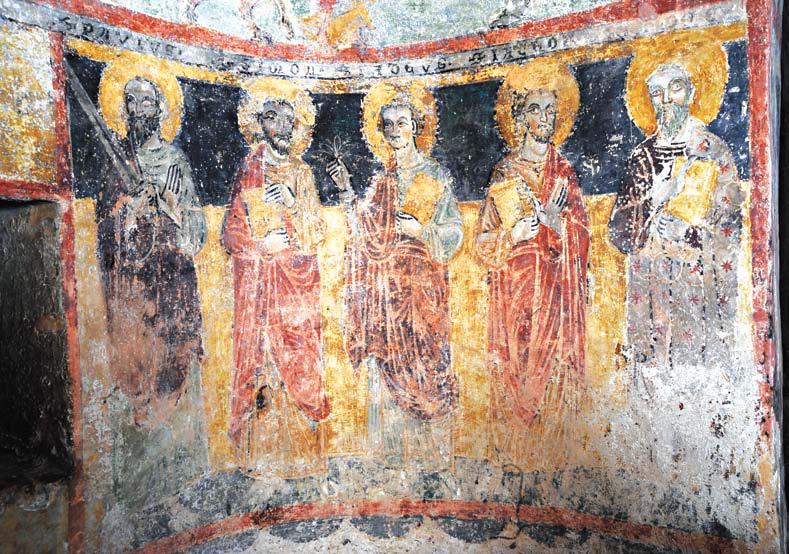
Today, St. Vincent’s Church is the only remains of the monastery that existed until 1314. It is especially interesting from the architectural point of view, as a single-naved church with three inscribed apses. Of the three layers of frescoes, the oldest, frst layer is only suggested by traces of faded color. Te second, most signifcant one dating from the end of the 13 th c. is attributed to Master Ognobenus from Treviso as evidenced by the inscription under the window of the southern apse. Te third layer, dating from the second half of the 14 th c. depicts the restored images of Apostles and partly preserved altar painting on the northern wall depicting an image of a female saint and the donator. On the side walls Ognobenus illustrates the Martyr-
dom of St. Vincent and St. Valerius, as well as scenes from the Life of Christ. In the apses are scenes of the Baptism of Christ, Maiestas Domini and Maiestas Virginis. Te wide triumphal arch reveals both scenes of the Annunciation and Cain and Abel’s Ofering. Iconographically interesting is the oldest calendar with allegorical representations of months. Te frescoes are signifcantly damaged due to the humidity of walls. Perhaps it is this very patina and mystical quality that render these frescoes so fascinating.
In terms of typology, St. Catherine’s Church is an interesting single-naved chapel with wood-en roofng and an inscribed apse ending with a pointed barrel vault. It is decorated with scenes from the life of St. Catherine. Te central part of the southern wall depicts scenes of her engagement. In the central feld is the Virgin Mary sitting on a backless throne with Christ on her lap, and behind them are three angels holding drapes. St. Catherine extends her hand towards Christ, so that he may, according to legend, place an engagement ring on her fnger. Te spatial organization of scenes, ornamental repertoire and anatomical details are simi-larities between the frescoes in St. Catherine’s Church and those of St. Anthony’s Church in Barban. Both cycles manifest a strong infuence of the North-Italian Trecento, although infuences of South Tyrolean mural painting are also visible.
Although it is in the vicinity of Pula, in the Middle Ages Svetvinčenat was under the au-thority of the Poreč diocese. It was once the site of the Benedictine monastery. In 1178 the well-known Pope Alexander III confrmed St. Vincent’s Church to the Poreč bishop cum cappelis suis. Svetvinčenat, that is the district-prefect of St. Vincent’s abbey, is mentioned in the most signifcant Istrian document, Survey of Istrian Land Boundaries (Istarski razvod), which bears witness of the development of a medieval settlement around the monastery. From 1209, when it became the possession of the Margrave of Istria, it changed many dif-ferent owners, until it completely became the possession of the Venetian Morosini family in 1523. At that time it acquired its present day appearance with one of the most beautiful and harmonious Renaissance squares.
Today, St. Vincent’s Church is the only remains of the monastery that existed until 1314. It is especially interesting from the architectural point of view, as a single-naved church with three inscribed apses. Of the three layers of frescoes, the oldest, frst layer is only suggested by traces of faded color. Te second, most signifcant one dating from the end of the 13 th c. is attributed to Master Ognobenus from Treviso as evidenced by the inscription under the window of the southern apse. Te third layer, dating from the second half of the 14 th c. depicts the restored images of Apostles and partly preserved altar painting on the northern wall depicting an image of a female saint and the donator. On the side walls Ognobenus illustrates the Martyr-
dom of St. Vincent and St. Valerius, as well as scenes from the Life of Christ. In the apses are scenes of the Baptism of Christ, Maiestas Domini and Maiestas Virginis. Te wide triumphal arch reveals both scenes of the Annunciation and Cain and Abel’s Ofering. Iconographically interesting is the oldest calendar with allegorical representations of months. Te frescoes are signifcantly damaged due to the humidity of walls. Perhaps it is this very patina and mystical quality that render these frescoes so fascinating.
In terms of typology, St. Catherine’s Church is an interesting single-naved chapel with wood-en roofng and an inscribed apse ending with a pointed barrel vault. It is decorated with scenes from the life of St. Catherine. Te central part of the southern wall depicts scenes of her engagement. In the central feld is the Virgin Mary sitting on a backless throne with Christ on her lap, and behind them are three angels holding drapes. St. Catherine extends her hand towards Christ, so that he may, according to legend, place an engagement ring on her fnger. Te spatial organization of scenes, ornamental repertoire and anatomical details are simi-larities between the frescoes in St. Catherine’s Church and those of St. Anthony’s Church in Barban. Both cycles manifest a strong infuence of the North-Italian Trecento, although infuences of South Tyrolean mural painting are also visible.
205205
This is a SEO version of revitas_freskemono_itl-gb-ZA LISTANJEpredlist. Click here to view full version
« Previous Page Table of Contents Next Page »